
By Caitlin Wiley
Executive Summary
The ocean is the most significant carbon sink on the planet, absorbing between one-quarter and one-third of all carbon dioxide (CO2) emissions. Increasing anthropogenic greenhouse gas emissions have led to a higher concentration of atmospheric CO2, resulting in a greater uptake of CO2 by the ocean. Over time, this has caused a reduction in the pH balance of ocean water, a phenomenon known as “ocean acidification.” Acidifying ocean waters could disrupt global seafood supply chains and affect marine food webs as it will negatively impact the growth of corals, mollusks, oysters, and other shell-building organisms. It will cost the global seafood industry and tourism industries up to 300 billion USD annually, and when accounting for lost ecosystem services from reef degradation will cost more than 1 trillion USD annually. To mitigate the harmful impacts of ocean acidification, world governments must mobilize to reduce carbon dioxide emissions, raise public awareness about this issue, and establish an international governance mechanism to coordinate the global response to ocean acidification.
Background
Carbon dioxide emissions associated with human impact, including the burning of fossil fuels, industrial activities, deforestation, and land-use change, are reducing the pH balance of the Earth’s oceans, a process called “ocean acidification.”[i][ii][iii] In 2020, atmospheric CO2 levels exceeded 410 parts per million, representing the highest carbon dioxide concentration within the last 55 million years.[iv] Atmospheric CO2 is absorbed into the ocean through a physical gas exchange process, which causes a series of chemical reactions that create carbonic acid.[v][vi] Carbonic acid accumulates over time, ultimately decreasing the pH balance of ocean water.
Studies indicate that ocean acidification (hereafter referred to as “OA”) will pose a significant threat to marine ecosystems as it will negatively affect shell- and exoskeleton-building marine organisms and their habitats, potentially leading to gaps in food webs and ecological destabilization. These negative impacts will have ripple effects on fishing and tourism industries, jeopardizing food security for millions of people. Due to the serious implications of OA, environmental scientists, including Jane Lubchenco, former head of the National Oceanic and Atmospheric Administration, have nicknamed it “climate change’s evil twin.”[vii]
Ecological Impacts. Ecologically, more acidic seawater harms shell- and exoskeleton-building organisms known as “calcifiers”, including corals and mollusks. A higher level of CO2 in ocean water lowers seawater pH balance and reduces the prevalence of carbonate ions in the water column. Calcifying marine organisms rely on carbonate ions to build their exoskeletons and shells.[viii][ix][x] A lower concentration of carbonate ions “can make building and maintaining shells and other calcium carbonate structures difficult for calcifying organisms.”[xi]
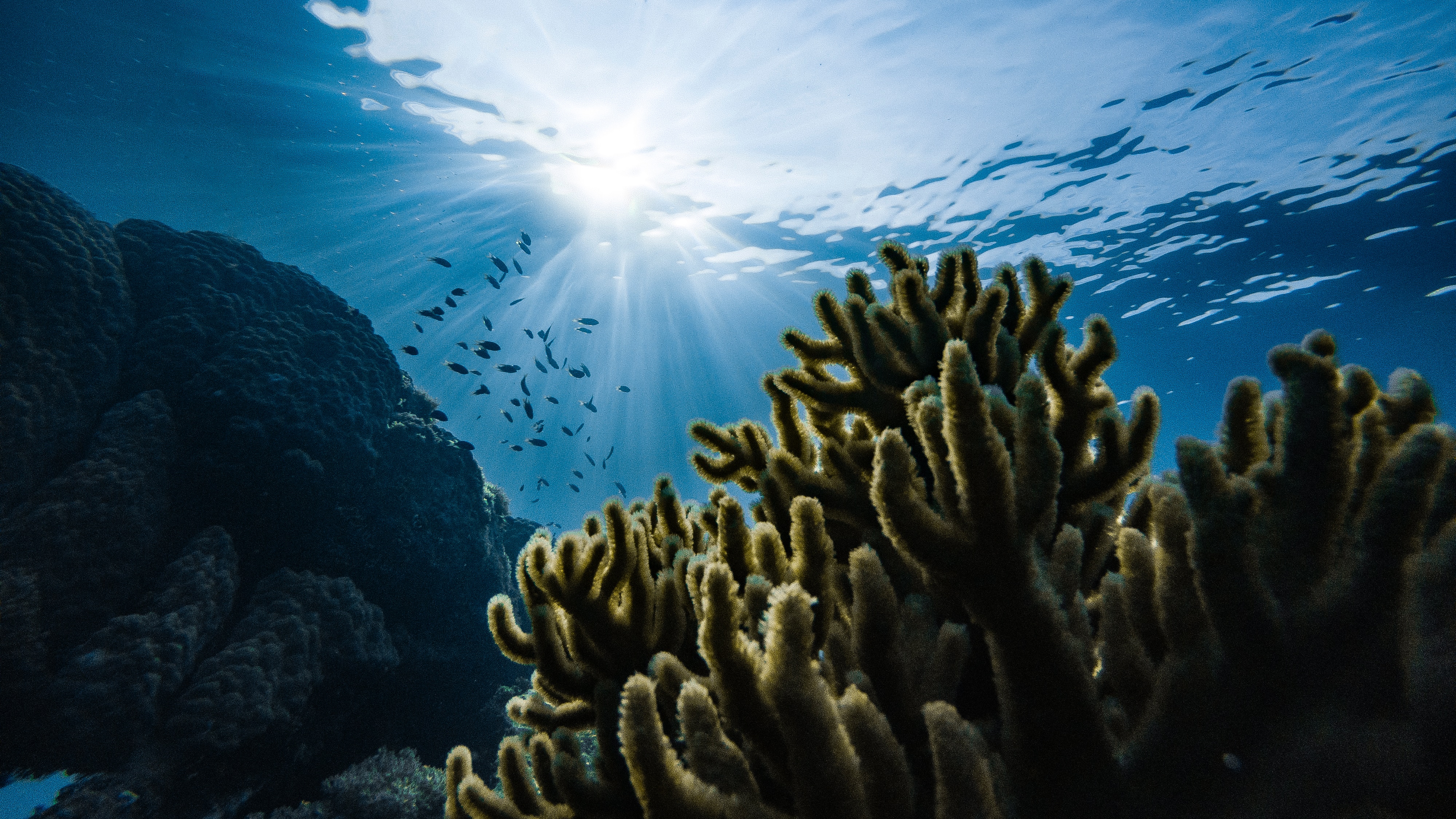
Coral reefs are especially vulnerable to changing ocean conditions. Modern coral varieties will not be able to adapt to rapidly changing ocean environments, and coral colonies will likely significantly decline.[xii] Some coral species may be more resilient to acidifying waters, but generally, “[a]s the world’s oceans become less saturated with respect to carbonate minerals over time, corals are expected to build weaker skeletons and experience slower growth rates.[xiii]” Marine species that rely on coral reefs for shelter, spawning, and food, such as the charismatic clownfish, butterfly fish, and parrotfish and commercially important groupers, will need to adapt or be wiped out as coral colonies die off.[xiv][xv]
Economic Impacts. Ecological losses will directly result in economic losses, primarily for coastal communities that rely on tourism and commercial fishing. Coral reefs are vital drivers of tourism, drawing divers, snorkelers, sport-fishers, and beachgoers to enjoy their splendor. This makes them a vital component of tourism industries for several countries, including Egypt, Indonesia, Mexico, and Thailand.[xvi] Many small, developing island nations, including Anguilla, Antigua & Barbuda, Bermuda, St. Kitts & Nevis and St. Martin also depend heavily on reef tourism.[xvii] Tourism to coral reefs and coral reef-adjacent areas, such as the islands and beaches in the vicinity of coral reefs, is estimated to generate 36 billion USD in annual revenue worldwide for over one hundred countries and territories.[xviii] Coral reef losses due to OA will lead to a drop in reef tourism, harming countries reliant on this industry.
Decreased shellfish catch due to OA will cause significant economic losses in the commercial fishing industry. Additionally, commercial fish species such as herring and salmon will no longer be able to prey on tiny, shelled organisms since those species will not survive in acidifying waters.[xix] Due to these adverse impacts on shellfish and fish species, OA is expected to cost the global seafood industry between 6 and 100 billion USD annually due to lost catch by the year 2100.[xx] In the United States, OA is already affecting oyster farming by costing millions of dollars in lost revenue and putting thousands of jobs at risk. When considering the costs of coral reef destruction along with losses to commercial fisheries, this estimate grows to approximately 300 billion USD annually.[xxi] Putting a price on the ecosystem services, such as coastal protection, that will be lost due to OA has proven much harder than valuing losses from the fishing and tourism industries; however, a report published by the United Nations Convention on Biological Diversity in 2014 put the number at more than 1 trillion USD annually.[xxii]
Impacts on Food Security. Decline of global fisheries will have implications for food security as an estimated 3.3 billion people globally rely on fish and shellfish for at least 20% of their animal protein intake.[xxiii] In many developing countries, this proportion is typically much higher, with fisheries supplying critical nutrients in coastal communities and nourishing coastal cultures.[xxiv] Diminishing shellfish catches, including smaller individual shellfish catch and shrinking shellfish populations, means billions of people will face challenges in securing protein sources.
Critical Actors and Current Policy Landscape
Despite the global scale of the problem, only a handful of industrialized nations, including the United States, the United Kingdom, and (as of the past 20 years) China, are disproportionally responsible for the emissions causing OA (Figure 1). Interestingly, these industrialized countries are also among the most vulnerable to the impacts of OA.

The Harrould-Kolieb et al. study in 2009 listed the UK, Japan, France, the Netherlands, and Australia, as the five countries most vulnerable to OA due to their reliance on seafood and the importance of coral reefs to their economies.[xxv] These states are all members of the United Nations Framework Convention on Climate Change (UNFCCC), the global treaty in place to reduce greenhouse gas emissions and mitigate climate change. All are also parties to the 2015 Paris Agreement, which called for critical emissions reductions. However, as of 2023, the states contributing the most to OA and climate change have done little to comply with their voluntary emissions reduction commitments. The Agreement itself has no formal mechanism to punish states that do not comply with their promised emissions reductions.[xxvi] Pressure to comply mostly comes from the public and civil society within member states and parties to the Agreement meeting regularly to hold one another accountable.
Other crucial international policy documents governing the ocean include the 1972 London Convention on Anti-Dumping,[xxvii] the 1982 Convention on the Law of the Sea,[xxviii] and the 1993 Convention on Biological Diversity.[xxix] The London Convention regulates marine pollution and seeks to prevent disposing of water by dumping waste it into the ocean, while the Law of the Sea established the rules for determining the edges of coastal states’ territorial waters. These agreements are relevant to the conversation around abating OA because some proposals to restore ocean pH to pre-industrial levels call for introducing minerals such as iron directly into ocean water to either change the water chemistry directly or encourage the growth of organisms that can sequester carbon. Additionally, some carbon capture plans entail sequestering CO2 in ocean water or in the seabed.[xxx] To seriously consider these options, both the Law of the Sea and the London Convention must be respected where member parties are concerned, and may need to be modified to better allow for experimentation to abate OA. The Convention on Biological Diversity is relevant as it recognizes the diversity of life underwater and seeks to protect ecosystems from harm. While all of these agreements involve governing aspects of international cooperation on uses of the ocean, none of them explicitly mention OA or have a specific mandate to deal with the problem. There is no current global governance mechanism specifically designed to monitor and address OA.
Proposed Policy Options
Reduce Carbon Dioxide Emissions. All attempts to mitigate OA must begin by encouraging a dramatic reduction in anthropogenic CO2 emissions. Doing so will prevent OA from worsening by slowing the rate of CO2 emissions into the atmosphere.[xxxi][xxxii][xxxiii] States should intensify efforts to comply with their voluntary emissions reduction commitments under the Paris Agreement to lessen the impacts of climate change and OA.
Raise Public Awareness. Public awareness of ocean acidification remains low relative to other global environmental issues related to climate change. In a 2016 survey of United Kingdom residents, 80% of respondents indicated that they had never heard of OA.[xxxiv] Survey results of the public in the United States indicated the same, with almost 80% of those surveyed responding that they knew little about OA.[xxxv] Lack of public awareness is a problem since “when environmental topics such as ocean health and climate change are viewed as unfamiliar and psychologically distant, this can translate into low support for policy efforts” and a lack of support for funding scientific research.[xxxvi] To better abate OA, parties to the UNFCCC should devote resources to public awareness campaigns about the problem. Within the United States, campaigns would be spearheaded by either the National Oceanic and Atmospheric Administration’s Ocean Acidification Program or the Department of State’s Bureau of Oceans and International Environmental and Scientific Affairs. The awareness campaigns should synthesize the current scientific literature on OA into easily understandable infographics, social media posts, and fact sheets available to the public. Within individual UNFCCC member countries, outreach efforts should focus on the localized impacts of OA on coastal communities and to communicate what each government is doing to mitigate OA. Focusing on the local scale will enable people who would otherwise think that OA did not apply to them, or who might feel overwhelmed by the scale of the problem, to see the impacts on their community and engage with potential solutions. With increased public awareness and support for mitigation efforts, the United States and other UNFCCC member countries can press for an expanded legal framework to better address OA at the international level.
Create a Global Governance Mechanism. Even though ocean acidification would seem to lie within the mandate of the UNFCCC, the original framework convention text does not mention OA even once.[xxxvii] This omission undermines the efficacy of the UNFCCC as a legal structure to address OA. As UNFCCC parties do not have an explicit mandate to abate OA, it is seldom the focus of UNFCCC policy discussions.[xxxviii] Several United Nations sub-groups have discussed OA, but it has not been recognized as an issue that needs to be incorporated into the UNFCCC framework.[xxxix] The lack of incorporation could be because OA is often conceptualized as a separate and less pressing problem occurring concurrently with climate change instead of as a direct result of greenhouse gas emissions.[xl]
Member countries should recognize that OA is a result of climate change and a significant problem worth addressing with dedicated funding and increased political attention. They should establish a working group under the auspices of the UNFCCC to draft the text of a new agreement expressly designed to address OA. This new agreement would ideally function as an extension of the current UNFCCC since climate change and OA are intrinsically linked. However, updating the existing UNFCCC structure may be difficult as member countries will likely be reluctant to commit to additional restrictions. Recognizing this potential barrier, the states most at risk from OA should start by forming a separate body outside the current framework to address OA specifically. Ideally, this body would function as the Intergovernmental Panel on Climate Change for Ocean Acidification, compiling scientific literature into briefs for the public and policymakers. Funding studies on the economic and ecological impacts of OA to supplement existing knowledge would be a valuable function of this body. This forum would advance research on OA and garner political support for a future binding agreement on the problem.
Conclusion
Ocean acidification is a global problem that is already altering the composition of our oceans. OA will harm populations of calcifying organisms and damage marine food webs, with negative implications for tourism, commercial fishing, and global food security. If this problem goes unaddressed, OA will push some key species past their ecological limits, leading to biodiversity and habitat loss. This loss in and of itself would be a tragedy. Still, what makes this loss even worse is the fact industries that rely on marine life will stand to lose billions of dollars annually, and millions (if not billions) of people may experience food insecurity due to protein shortages. Expanded funding should be allocated to research and development of a broad range of OA mitigation options, and action must be taken globally to prevent exacerbation.
International cooperation on OA has been challenging because no global governance mechanism currently exists to address OA sufficiently. Parties to the UNFCCC should correct this significant oversight by updating the UNFCCC agreement or creating a new body to concentrate scientific research regarding the impacts of OA and raise public awareness of the problem. OA, like climate change, is a problem of human responsibility, and the world must cooperate to reduce global CO2 emissions to mitigate OA before our planet’s oceans become unrecognizable.
[i] Ottmar Edenhofer et al., eds., “Climate Change 2014 Mitigation of Climate Change – Working Group III Contribution to the Fifth Assessment Report of the Intergovernmental Panel on Climate Change,” Intergovernmental Panel on Climate Change, 2014, https://www.ipcc.ch/site/assets/uploads/2018/02/ipcc_wg3_ar5_full.pdf.
[ii] Scott C. Doney, D. Shallin Busch, Sarah R. Cooley, and Kristy J. Kroeker, “The Impacts of Ocean Acidification on Marine Ecosystems and Reliant Human Communities,” Annual Review of Environment and Resources 45, no. 1 (October 17, 2020): 83–112, https://doi.org/10.1146/annurev-environ-012320-083019.
[iii] Sverker C. Jagers, Simon Matti, Anne-Sophie Crépin, David Langlet, Jonathan N. Havenhand, Max Troell, Helena L. Filipsson, Victor R. Galaz, and Leif G. Anderson, “Societal Causes of, and Responses to, Ocean Acidification,” AMBIO: A Journal of the Human Environment 48, no. 8 (November 14, 2018): 816–30, https://doi.org/10.1007/s13280-018-1103-2.
[iv] Scott C. Doney, D. Shallin Busch, Sarah R. Cooley, and Kristy J. Kroeker, “The Impacts of Ocean Acidification on Marine Ecosystems and Reliant Human Communities,” Annual Review of Environment and Resources 45, no. 1 (October 17, 2020): 83–112, https://doi.org/10.1146/annurev-environ-012320-083019.
[v] Ibid.
[vi] National Oceanic and Atmospheric Administration, “What Is Ocean Acidification?”, January 20, 2023, https://oceanservice.noaa.gov/facts/acidification.html.
[vii] Heilprin, John. “Acid Oceans: The ‘evil Twin’ of Climate Change.” Phys.Org. Associated Press, December 18, 2009. https://phys.org/news/2009-12-acid-oceans-evil-twin-climate.html.
[viii] Victoria J. Fabry, Brad A. Seibel, Richard A. Feely, and James C. Orr, “Impacts of Ocean Acidification on Marine Fauna and Ecosystem Processes,” Ices Journal of Marine Science 65, nao. 3 (April 1, 2008): 414–32, https://doi.org/10.1093/icesjms/fsn048.
[ix] National Oceanic and Atmospheric Administration. n.d. Ocean Acidification. https://www.noaa.gov/education/resource-collections/ocean-coasts/ocean-acidification.
[x] Julia A. Ekstrom, Lisa Suatoni, Sarah R Cooley, Linwood H Pendleton, George G Waldbusser, Josh E Cinner, Jessica Ritter, “Vulnerability and Adaptation of US Shellfisheries to Ocean Acidification,” Nature Climate Change 5, no. 3 (February 23, 2015): 207–14, https://doi.org/10.1038/nclimate2508.
[xi] Scott C. Doney, D. Shallin Busch, Sarah R. Cooley, and Kristy J. Kroeker, “The Impacts of Ocean Acidification on Marine Ecosystems and Reliant Human Communities,” Annual Review of Environment and Resources 45, no. 1 (October 17, 2020): 83–112, https://doi.org/10.1146/annurev-environ-012320-083019.
[xii] Ove Hoegh‐Guldberg, P. J. Mumby, A. J. Hooten, R. S. Steneck, Greenfield P., Gomez E., C. D. Harvell, et al., “Coral Reefs under Rapid Climate Change and Ocean Acidification,” Science 318, no. 5857 (December 14, 2007): 1737–42, https://doi.org/10.1126/science.1152509.
[xiii] Secretariat of the Convention on Biological Diversity, “Impacts of Ocean Acidification on Marine Biodiversity,” UNEP – UN Environment Programme, 2009, https://www.unep.org/resources/report/impacts-ocean-acidification-marine-biodiversity, 37-38.
[xiv] Center for Biological Diversity. “Key Species Profiles.” https://www.biologicaldiversity.org/campaigns/endangered_oceans/species_profiles.html
[xv] Woods Hole Oceanographic Institution. “Reef Fish.” https://www.whoi.edu/know-your-ocean/ocean-topics/ocean-life/coral/reef-fish/
[xvi] Mark Spalding, Lauretta Burke, Spencer A. Wood, Joscelyne Ashpole, James Hutchison, and Philine S. E. Zu Ermgassen, “Mapping the Global Value and Distribution of Coral Reef Tourism,” Marine Policy 82 (August 1, 2017): 104–13, https://doi.org/10.1016/j.marpol.2017.05.014.
[xvii] The Nature Conservancy. “The Caribbean Needs Tourism, and Tourism Needs Healthy Coral Reefs.” January 14, 2019. https://www.nature.org/en-us/what-we-do/our-insights/perspectives/the-caribbean-needs-tourism–and-tourism-needs-healthy-coral-ree/
[xviii] Mark Spalding, Lauretta Burke, Spencer A. Wood, Joscelyne Ashpole, James Hutchison, and Philine S. E. Zu Ermgassen, “Mapping the Global Value and Distribution of Coral Reef Tourism,” Marine Policy 82 (August 1, 2017): 104–13, https://doi.org/10.1016/j.marpol.2017.05.014.
[xix] Washington State Blue Ribbon Commission on Ocean Acidification, “Ocean Acidification: From Knowledge to Action,” 2012, https://fortress.wa.gov/ecy/publications/publications/1201015.pdf, xiv.
[xx] Daiju Narita, Katrin Rehdanz, and Richard S.J. Tol, “Economic Costs of Ocean Acidification: A Look into the Impacts on Global Shellfish Production,” Climatic Change 113, no. 3–4 (January 8, 2012): 1049–63, https://doi.org/10.1007/s10584-011-0383-3.
[xxi] Stephen G. Colt, and Gunnar P. Knapp. “Economic Effects of an Ocean Acidification Catastrophe.” American Economic Review 106, no. 5 (2016): 615-619. Accessed November 26, 2023. https://doi.org/10.1257/aer.p20161105.
[xxii] Secretariat of the Convention on Biological Diversity (2014). An Updated Synthesis of the Impacts of Ocean Acidification on Marine Biodiversity (Eds: S. Hennige, J.M. Roberts & P. Williamson). Montreal, Technical Series No. 75, 99 pages.
[xxiii] United Nations Food and Agriculture Organization, “The State of World Fisheries and Aquaculture: Sustainability in Action,” 2020, https://www.fao.org/3/ca9229en/ca9229en.pdf.
[xxiv] United Nations Food and Agriculture Organization, “The State of World Fisheries and Aquaculture: Sustainability in Action.”
[xxv] Ellycia Harrould-Kolieb, Michael Hirshfield, Ph.D, and Ashley Brosius, “Major Emitters Among Hardest Hit by Ocean Acidification,” Oceana, December 2009, https://oceanfdn.org/sites/default/files/Acidity%20Vulnerability%20Risk%20Report.pdf.
[xxvi] Kathryn Tso and Michael Mehling, “How Are Countries Held Accountable under the Paris Agreement? | MIT Climate Portal,” MIT Climate Portal, March 8, 2021, https://climate.mit.edu/ask-mit/how-are-countries-held-accountable-under-paris-agreement.
[xxvii] The London Convention has been ratified by 89 parties, including 15 out of the 19 Group of 20 (G20) countries and the European and African Unions, who collectively represent the largest economic producers of goods and services globally. Of the G20, only India, Indonesia, Saudia Arabia, and Turkey have not ratified the agreement.
[xxviii] The Convention on the Law of the Sea has been ratified by 169 parties, including the majority of the world’s industrialized countries. Notably, the United States has not signed this agreement due to reservations around the deep-sea mining provisions of the agreement.
[xxix] The Convention on Biological Diversity has been ratified by all UN member states except the United States.
[xxx] Rachel Baird, Tim Stephens, and Meredith Simons, “Ocean Acidification: A Litmus Test for International Law,” Carbon and Climate Law Review 3, no. 4 (January 1, 2009): 459-471, http://www.jstor.org/stable/24323666.
[xxxi] Scott C. Doney, D. Shallin Busch, Sarah R. Cooley, and Kristy J. Kroeker, “The Impacts of Ocean Acidification on Marine Ecosystems and Reliant Human Communities,” Annual Review of Environment and Resources 45, no. 1 (October 17, 2020): 83–112, https://doi.org/10.1146/annurev-environ-012320-083019.
[xxxii] Sverker C. Jagers, Simon Matti, Anne-Sophie Crépin, David Langlet, Jonathan N. Havenhand, Max Troell, Helena L. Filipsson, Victor R. Galaz, and Leif G. Anderson, “Societal Causes of, and Responses to, Ocean Acidification,” AMBIO: A Journal of the Human Environment 48, no. 8 (November 14, 2018): 816–30, https://doi.org/10.1007/s13280-018-1103-2.
[xxxiii] Sarah R. Cooley and Scott C. Doney, “Anticipating Ocean Acidification’s Economic Consequences for Commercial Fisheries,” Environmental Research Letters 4, no. 2 (June 1, 2009): 024007, https://doi.org/10.1088/1748-9326/4/2/024007.
[xxxiv] Stuart Capstick, Nick F. Pidgeon, Adam J. Corner, Elspeth M. Spence, and Paul N. Pearson, “Public Understanding in Great Britain of Ocean Acidification,” Nature Climate Change 6, no. 8 (May 9, 2016): 763–67, https://doi.org/10.1038/nclimate3005.
[xxxv] Sandra Cooke and Sojung C. Kim, “Exploring the ‘Evil Twin of Global Warming’: Public Understanding of Ocean Acidification in the United States,” Science Communication 41, no. 1 (December 26, 2018): 66–89, https://doi.org/10.1177/1075547018821434.
[xxxvi] Cooke and Kim, “Exploring the ‘Evil Twin of Global Warming’: Public Understanding of Ocean Acidification in the United States,” 69-70.
[xxxvii] United Nations Framework Convention on Climate Change, “United Nations Framework Convention on Climate Change,” 1994, https://unfccc.int/resource/docs/convkp/conveng.pdf.
[xxxviii] Charles Galdies, Rachel Tiller, and Beatriz Martínez Romera, “Global Ocean Governance and Ocean Acidification,” in Encyclopedia of the UN Sustainable Development Goals, 2021, 1–12, https://doi.org/10.1007/978-3-319-71064-8_109-1.
[xxxix] Ellycia Harrould‐Kolieb, “(Re)Framing Ocean Acidification in the Context of the United Nations Framework Convention on Climate Change (UNFCCC) and Paris Agreement,” Climate Policy 19, no. 10 (August 5, 2019): 1225–38, https://doi.org/10.1080/14693062.2019.1649994.
[xl] Harrould‐Kolieb, “(Re)Framing Ocean Acidification in the Context of the United Nations Framework Convention on Climate Change (UNFCCC) and Paris Agreement.”
Leave a Reply