
By Marcus Mildenberger
Earthquakes in Turkey and Syria in February 2023 have refocused the world’s attention on the ongoing Syrian Civil War. While the Russian invasion of Ukraine and rising tensions in the South China Sea have occupied Western military strategists and policymakers over the past year, the war in Syria has seemingly been forgotten. The removal of American combat forces from Afghanistan has decreased the United States’ presence in the Middle East, but sanctions remain the most common instrument of US foreign policy in Syria. The use of sanctions has been ineffective in changing the behavior of the country’s president, Bashar al-Assad and has disproportionately harmed ordinary Syrians. Now is an opportunity for policymakers to re-evaluate interests in the region, save Syrian lives, and determine a path toward sustainable peace.
On the morning of February 6, 2023, two devastating earthquakes struck Turkey and Syria. The initial earthquakes, followed by thousands of aftershocks, destroyed infrastructure, collapsed buildings, and covered thousands of citizens of both countries in rubble. At the time of writing, there have been over 54,000 deaths, a figure that is expected to rise as more people are located and identified, making it one of the region’s most deadly natural disasters in history.[i] According to the United Nations Refugee Agency, up to 5.3 million Syrians have lost their homes.[ii]
The catastrophe has returned attention to Syria, the civil war, and how broad international sanctions have limited the speed and effectiveness of humanitarian aid entering the country. The United Nations was one of many organizations calling on the United States and European Union (EU) to lift sanctions and financial restrictions to facilitate the transportation of increased aid into the country, resulting in the US lifting sanctions on Syria for 180 days.[iii] The EU followed suit and committed to easing sanctions for the next six months.[iv] While the temporary curtailment of Syrian sanctions is a small, yet positive, step toward providing international aid groups with more tools for getting supplies and resources into the country, the current sanction regime has failed to produce its intended results: weakening Assad’s power and ability to continue funding the war. It is time for a different approach.
Sanctions were first imposed on the Syrian president in 2011 after Assad mobilized the Syrian military to suppress his political opposition. The brutal repression of anti-government protests fueled the outbreak of a civil war. Rebels, backed by Saudi Arabia, Turkey, and the United States, began fighting against the Syrian government, which was backed by Iran and Russia throughout the country.[v] More than nine nations and entities – the Arab League, Canada, the EU, Japan, Norway, Switzerland, Turkey, the US, and the United Kingdom – imposed sanctions on Assad’s government, quickly making the country one of the most heavily sanctioned nations in the world.[vi]
Initial sanctions proved to have little effect on Assad, who escalated the conflict by using chemical weapons, including mustard gas and sarin, in the city of Homs in December of 2012.[vii] Instability within the country allowed the Islamic State to begin amassing territory within Syria in 2013, which was countered by significant financial contributions to rebels by Qatar and Saudi Arabia that same year.[viii] In 2015, a coalition of the US, UK, and France began a coordinated air strike campaign against Islamic extremists in Syria.[ix] What originally was a civil war quickly devolved into a complex global proxy war between the Western allies in the Gulf versus Moscow and Tehran.
Twelve years after starting a broad sanction regime against Assad’s government, sanctions have failed to coerce President Assad into political concessions, improve his human rights record, destroy his stockpile of chemical weapons, or engage in substantive dialogue to resolve the war. Sanctions are not punishing Assad, and their design is inflicting tremendous pain on the Syrian people. A 2021 report on the US and EU’s Syria sanctions found that the narrow application of sanctions on elite individuals at the top of the Assad regime has limited their effectiveness and, in some cases, sanctioned individuals grew more committed to the regime as it proved loyalty, patriotism, and dedication to the government’s cause. Adding to the limits of current sanctions, shell companies have become a frequently used tool for circumventing international financial restrictions placed on Syrian elites and business owners. Syrian Foreign Minister, Faisal Mekdad, remarked on the country’s ability to circumvent them, saying in 2021, “evading sanctions has become a Syrian craft” and explained that foreign investors could continue doing business through shell companies, sometimes listed under the name of a child or close relative of the original proprietor.
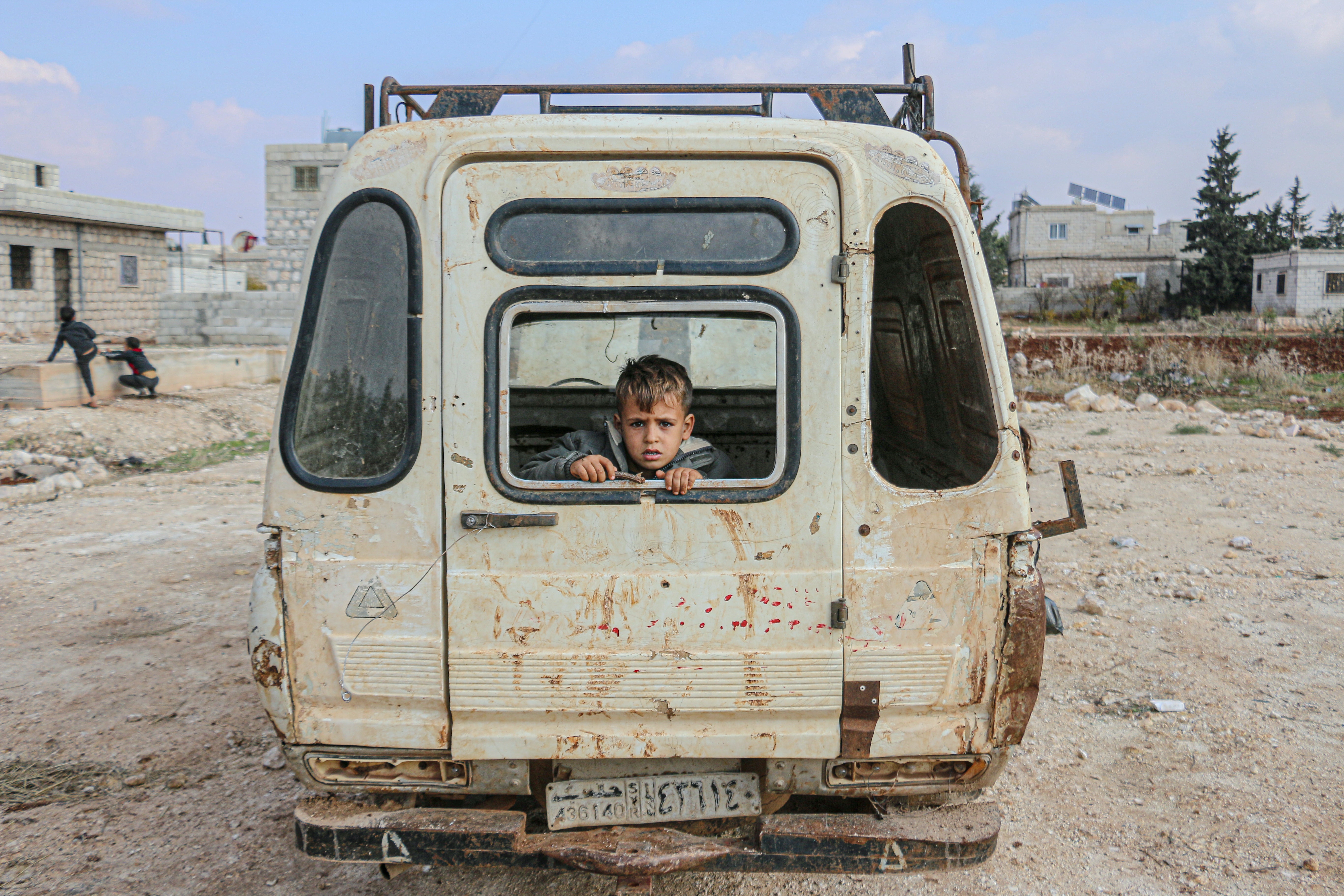
Today, an astonishing 90 percent of Syrians currently live in poverty following historic levels of inflation, where prices have increased by over 800 percent. Twelve years of war have crippled the Syrian economy, displaced millions, and created a devastating crisis where 14.6 million Syrians, 7 million of whom are children, require some form of humanitarian assistance.[x] While sanctions have hoped to contain and limit Assad’s government, there are numerous examples of their impact spilling over into impoverished communities and inhibiting access to life-saving medicine and humanitarian assistance. Mohammed Khalil, a medical worker in the city of Aleppo, spoke to the local effects of Western sanctions, saying, “Sanctions on Syria led to a shortage of drugs for some chronic diseases, and for cancer and chemotherapy treatments.”[xi]
Minimizing unintended spillover effects on local economies should be taken more seriously. Protecting and increasing financial channels for aid organizations to continue delivering life-saving assistance to the most vulnerable Syrians while establishing a system to check shell companies connected to Assad will maximize the effects of sanctions. Under the Caesar Act of 2019, the US has the tools to focus sanctions more precisely, which allows for secondary sanctions to be applied to organizations or individuals not directly under the Assad government, but beneficial to its policies or participants in the oppression of Syrians.[xii] Since the passing of the Caesar Act, it has only been applied to four Syrians associated with the Assad regime and has not included those part of the government’s security apparatus or militia leaders, both of whom have been linked to harsh repression of civilians.[xiii] The resources are available, but the lack of attention to the evolving nature of the war in Syria has had tremendous consequences for the people of Syria. It should not take a devastating earthquake for international leaders to remember Syria, the war, and the ongoing humanitarian crisis.
However, there are recent signs of sanctions becoming more refined, as the United States and the UK announced new sanctions on six people, including two cousins of Assad, for their roles in the trafficking of Captagon- a synthetic, amphetamine-type stimulant. According to the UK government, the trafficking of Captagon is estimated to be a $57 billion enterprise, three times more than the combined trade of Mexican cartels, and one of the final financial lifelines for the Assad regime.[xiv] Analysts estimate the value of the Captagon trade is much lower, around $5-10 billion, but steadily increasing each year from nearly $1.8 billion in 2017 to over $3.4 billion in 2020, showing that the trade is expanding rapidly.[xv] Policymakers in the United States and Europe should recognize the mutual interests of refining sanctions to better target sources of revenue for Assad’s regime and crack down on criminal networks while increasing regional resources for intercepting shipments of weapons and drugs like Captagon.
Notes
[i] “Quake death toll nears 48,000 in Turkey, 6,000 in Syria,” AP News, March 11, 2023.
[ii] United Nations High Commissioner for Refugees, “UNHCR: Over 5 million may need shelter support in Syria after quake,” February 10, 2023
[iii] United States Department of Treasury, February 9th, 2023, Press Release.
[iv] France24, EU eases Syria sanctions to speed up quake aid, February 23, 2023.
[v] Center for Preventive Action, “Conflict in Syria,” updated February 15, 2023.
[vi] Geneva Center for Security Studies, March 21, 2021.
[vii] Daryl Kimball, “Timeline of Syrian Chemical Weapons Activity, 2012-2022,” Arms Control Association, May 2021.
[viii] Beauchamp, Zack. Vox, “The war in Syria, explained,” April 13, 2018.
[ix] Conflict in Syria, the Center for Preventive Action, February 15, 2023.
[x] Euro-Mediterranean Human Rights Monitor, October 17th, 2022
[xi] “Earthquake Death Toll Reaches 42,000 As Aid Workers Condemn US-Led Sanctions on Syria,” Democracy Now! February 16, 2023.
[xii] Shaar, Karam, Dimashqi, Said. Atlantic Council, “US sanctions on Syria are not working. It is time for a new sanctions approach that minimizes humanitarian suffering and increases leverage,” January 13, 2023
[xiii] Alalwani, Wael, Shaar, Karam.
[xiv] Raya Jalabi, “Assad Cousins Hit with Sanctions over Amphetamine Trade That Funds Regime” (Financial Times, March 28, 2023).
[xv] Caroline Rose and Alexander Söderholm, “The Captagon Threat: A Profile of Illicit Trade, Consumption, and Regional Realities” (New Lines Institute for Strategy and Policy, April 2022), p. 13.

Leave a Reply